Entry 02
Can you have a campfire in the UK? It depends whose land you are on
- Logged
- Weather
- Dry spells above all, though the rules below apply in any weather
- Pitch
- Campsites, forests and open country across the UK
- Written by
- The editors, about 6 minutes to read
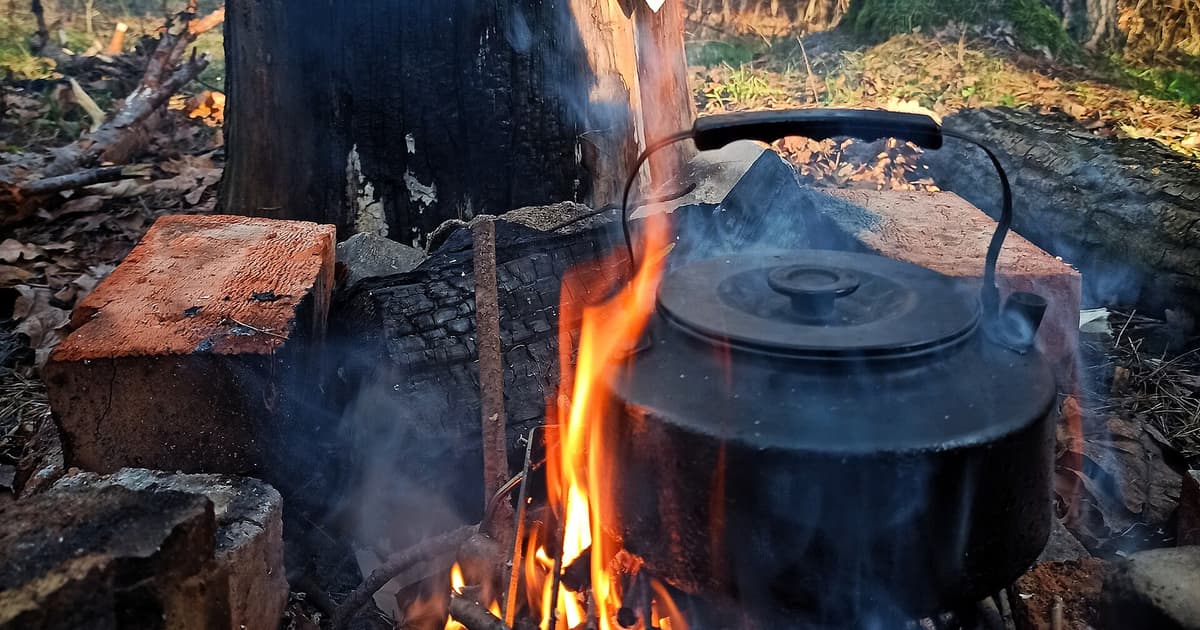
Usually not, unless the person who runs the land says you can. There is no single UK campfire rule to look up. What applies depends on the country you are in, who owns the ground, and the terms of any campsite you have booked. On most public countryside in England and Wales, the plain answer from the Countryside Code is do not light fires.
Rules can change at short notice in dry weather. We last checked each source below on 8 November 2026, so look at the landowner's own page before you travel.
| Where | Open fire | Barbecue or stove |
|---|---|---|
| Countryside in England and Wales | Do not light fires | Barbecues only where signs say you can |
| New Forest, Forestry England land | Permanently banned | Banned, including portable stoves, except raised, purpose-built ones on Forestry England campsites |
| Scotland, when wild camping | Not during high fire risk, and avoid sensitive ground at any time | Stove recommended; barbecues and fire bowls count as open fires in high risk periods |
| Newborough, Anglesey (NRW) | Banned | Barbecues banned, including car parks |
| Club Sites | Campfires prohibited | Portable, raised barbecues allowed; disposables not permitted for now |
| Three NI forest park campsites | Open fires and fire pits banned | Charcoal barbecues only, with time limits |
England and Wales: start with the Countryside Code
The Code covers both countries. Under its heading on protecting the environment it says not to light fires, and to only use barbecues where signs state they are allowed. It adds that you should put a barbecue out, make sure the ashes are cold, and dispose of them responsibly. Camping appears on its list of activities where you may need the landowner's permission.
Natural Resources Wales goes further in its own messaging. Its July 2025 advice asks visitors not to light campfires in the countryside, suggests a picnic in place of a barbecue in dry weather, and links camping without permission (it uses the term fly-camping) to a higher wildfire risk. It recommends booking official campsites.
Some individual sites have flat bans. In May 2025, NRW announced a complete ban on barbecues and fires across Newborough National Nature Reserve and Forest on Anglesey, including its car parks, and said overnight camping there remains prohibited.
Forestry England and the New Forest
The New Forest is the clearest example of how strict things can get. Forestry England says fires, barbecues and outdoor cooking equipment are permanently banned within the Forest, and that the ban takes in single-use barbecues and portable stoves. That matters if you assumed a small gas stove in a car park was fine: it is not.
The details are worth reading if you are heading there:
- Forestry England gives a fixed penalty of £100, rising to £1,000 after a successful prosecution. Check the current figure on its page.
- Dropping or throwing anything that could start a fire, such as a lit cigarette, is also an offence.
- Campervans can use built-in cooking facilities, as long as they do not extend outside the vehicle.
- Forestry England campsites allow purpose-built barbecues and stoves raised off the ground, but disposable barbecues are banned there too.
- Campsite cooking may be stopped at any time, because the fire risk is reviewed regularly.
That page covers the New Forest. Other forests have their own arrangements, so check the page for the one you are visiting and do not carry these details across.
Scotland: wider access, but a real fire warning
Access rights in Scotland are different. The Scottish Outdoor Access Code allows lightweight camping if done responsibly, in small groups, for no more than two or three nights in one place, and some areas have byelaws, including seasonal ones in parts of Loch Lomond and The Trossachs National Park.
The right to camp is not a licence for a fire. The Code says not to light an open fire, including in fire bowls or barbecues, during times of high fire risk. It says to avoid fires near forests, farmland, peaty ground, buildings and historic sites, and to pay attention to fire danger warnings. If you need to cook, it suggests a stove on a level, non-flammable surface, away from dry grass and your tent. It also asks you to leave deadwood where it lies, because creatures live in it and feed on it, and never to cut or damage trees.
Northern Ireland
We have not found a single rule to quote for the whole country, so check with the land manager. For a concrete example, nidirect's campsite rules for Drum Manor, Glenariff and Tollymore forest parks say open fires and fire pits are banned at all times. Purpose-made charcoal barbecues are allowed until 10.30pm, must be out by 11pm, and must not sit directly on the ground.
On a campsite: read the booking terms
Campsites set their own rules, and they differ widely. Some may allow fire pits, and others will not. At the Camping and Caravanning Club's own sites, the site policy says campfires are strictly prohibited and disposable barbecues are not permitted until further notice. Portable barbecues are allowed outside if raised off the ground far enough to prevent damage.
The Club's policy does not name fire pits or chimineas, so ask before you pack one. The same goes for any site: a quick message to the owner saves an awkward conversation on the pitch. If a site does permit fires, take your cue from them on where it can go, and ask whether wood is sold on site.
If you do have permission
A permitted fire still needs the same care. Our suggestions are mostly common sense:
- Use the fire pit or raised container the site tells you to use. Avoid bare grass.
- Keep it small, away from tents, guy lines, overhanging branches and dry vegetation.
- Have water to hand before you light it. The Club recommends a fire bucket full of water outside your unit in any case.
- Never leave it unattended, and never bring embers or a warm barbecue near your tent. Our carbon monoxide entry explains why.
- Put it out completely. Stir and soak until the ashes are cold.
- Take your rubbish home, and glass in particular. NRW warns that one stray spark or discarded glass bottle can cause a devastating fire.
A stove is the easy way round
Most of the time, the question comes down to wanting a hot meal. A stove gets you that with far less risk and no scar on the ground, and it is allowed in many more places, though not everywhere, as the New Forest shows. Our guide to choosing a camping stove covers the options, and the meals in our one-burner entry need nothing more.
If a fire gets away
Call 999 straight away. Both the Countryside Code and the Scottish Code say this, the first for any unattended fire and the second for any fire out of control. Leave the area and do not try to tackle a spreading fire yourself. Tell the operator where you are as precisely as you can.
Checked against
- Camping and Caravanning Club: Camping safety
- Camping and Caravanning Club: Club Site policies
- GOV.UK: The Countryside Code
- Forestry England: Fire safety in the New Forest
- Scottish Outdoor Access Code: Camping
- Natural Resources Wales: Visiting responsibly, summer 2025
- Natural Resources Wales: Visiting our places safely
- Natural Resources Wales: Barbecues banned at Newborough
- nidirect: Forest campsite and touring rules
We last opened these pages on 8 November 2026. Rules and guidance change, so treat the original as the final word.