Entry 01
Which camping stove should you buy? Gas, spirit or liquid fuel
- Logged
- Weather
- Near-freezing nights change the answer, so check the forecast
- Pitch
- Anywhere from a car-camping table to a backpacking pitch
- Written by
- The editors, about 5 minutes to read
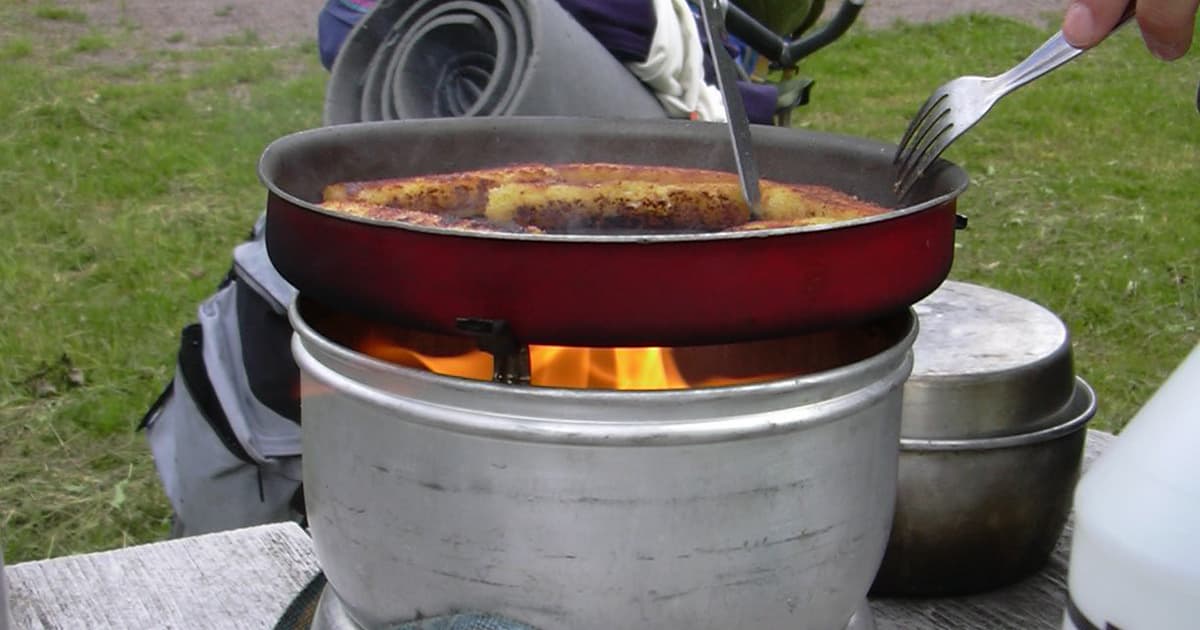
For most people starting out on UK campsites, a small gas stove is the sensible first buy. The Camping and Caravanning Club says a small gas stove would be a good place to start, because it will boil and fry, which covers pasta, rice and most of what you will want to make. Move away from that choice for two reasons: you are carrying everything on your back, or you are camping in real cold.
The three types, side by side
The British Mountaineering Council's stove guide sorts small stoves into three families. This table draws on that guide, and we have added notes for campsite use.
| Type | Good at | Watch out for |
|---|---|---|
| Gas cartridge or cylinder (LPG) | Clean burning, no spilled fuel, good heat, minimal maintenance | Cartridges cost more, must match the stove, and need disposing of. Standard mixes fade in the cold |
| Spirit, such as meths (unpressurised) | Simple, few parts to fail, cheap fuel. The BMC rates it as relatively safe for novice groups | Slow to boil, bulky, and the BMC says it performs poorly in the cold. Refill only when the burner is out and cold |
| Pressurised liquid fuel (petrol, kerosene, white gas) | Very high output and great performance in bad conditions. Fuel is cheap and widely available | Priming and plenty of maintenance. The BMC treats it as the most hazardous type if badly maintained or misused |
| Solid fuel blocks and gels | Very light, useful as a group emergency backup | Very low heat. The BMC does not recommend it for general cooking |
Start with how you actually camp
Driving to a campsite
Weight hardly matters, so stability does. A wider stove with one or two burners on a low table holds a family pan better than a tiny burner screwed to a cartridge. The Club notes that stoves come as single or dual burner, freestanding or table-top. If you cook for more than two, two burners stop dinner becoming a relay. For long stays, the Club says larger cylinders work out cheaper per unit of gas, while small exchange cylinders are easier to carry and steadier on site.
Carrying it in a rucksack
A compact gas burner is hard to beat for size. A spirit stove is simple and has little to go wrong, though the BMC notes that the stoves and their fuel containers are bulky. Small burners sit high on their cartridge, so use them on firm, level ground and keep pots small.
Cold-weather trips
This is where the fuel starts to matter more than the burner.
Why gas stoves sulk in the cold
LPG reaches the burner as vapour, and cold slows that down. The Club explains that butane is hard to turn to gas at anything below about 4C, while propane can be used all year. Many small cartridges therefore blend propane and butane, sometimes with isobutane, to widen the working range. The BMC says blends with isobutane or propane are the best gas option in the cold.
UK spring and autumn nights can easily fall into that range, so a stove that roared in July may barely simmer at breakfast in April. If you camp beyond the summer, look at the mix printed on the cartridge. If you have a larger cylinder, propane is the better choice for cold conditions, according to the Club. Never warm a cartridge over a flame or take a lit stove into the tent to help it along. Our tent safety entry explains why indoors is off the table.
Know your cartridge fitting
Cartridges are not all interchangeable, and this is an easy shopping mistake to make. The Club separates them like this:
- Pierceable: a hollow spike punctures the cartridge. Once fitted, it cannot be removed without losing gas.
- Integral valve: costs more, but is generally safer and easier. The valve reseals, so it can come off for travel. Most use an EN417 screw fitting.
- Manufacturer-specific: proprietary cartridges tie you to one maker's refills, so check you can buy them where you are going.
Whatever you buy, use only the fuel the stove's instructions name. The BMC stresses that canisters must match the stove.
Handling gas safely
HSE describes LPG as flammable and heavier than air, so a leak can settle and collect in low spots. A strong odorant is added so it is easy to detect. Those two facts explain most of the rules below, which come from the Club unless noted.
- Change cartridges and cylinders in the open air, never in a tent or building, and away from flames or anyone smoking.
- Learn how the fitting works before you are doing it in the dark.
- Never hunt for a leak with a flame. Check connections are secure and do not use anything that seems to be leaking.
- If a pierceable cartridge leaks, let it empty somewhere well ventilated. Do not disconnect and reconnect it. If liquid gas sprays out, move everyone away until the container is empty and the gas has dispersed.
- Inspect hoses for cracks and check the clamps. Replace hoses at least every five years, going by the date stamped on them.
- Dispose of empties carefully, following local guidance, and never put them on a fire. Any residue could cause an explosion.
Storing and carrying fuel
Keep cartridges and cylinders away from heat and ignition sources, and upright unless the design says otherwise. The Club advises against keeping a cylinder in your tent overnight, and says that if you have a trailer, gas should travel there and not in the car. Calor's general advice for its bottles is similar: store them outside and upright, well ventilated and clear of heat. Cylinders on their side can let liquid LPG escape through the valve, so strap them upright for the journey. Follow the supplier's instructions, since they know their own product.
Liquid fuel has its own hazards. The BMC warns that volatile fuels can make a stove flare or explode if it is badly maintained or used incorrectly. Follow the maker's instructions on filling and priming, and refuel only when the stove is cold.
Small things that make any stove better
Set the stove on a level, non-flammable surface and keep dry grass well clear. The Club suggests raising it off the ground to protect the pitch, and adding a fire blanket nearby. Use a lid on the pot. It saves fuel and time. Wind is the great stove thief, so pick a sheltered spot, away from the tent, and check the stove's instructions before using a windshield, because some setups can overheat a cartridge.
Finally, check the rules for where you will be cooking. Some places ban even portable stoves, as our campfire and stove rules explain. Once you have a stove you trust, our camp kitchen list covers what goes with it.
Checked against
- HSE: About liquefied petroleum gas
- Camping and Caravanning Club: Gas for tent campers
- Camping and Caravanning Club: Gas for caravans and motorhomes
- Camping and Caravanning Club: Camping cooking equipment
- Camping and Caravanning Club: Camping for beginners
- British Mountaineering Council: How to choose a stove
- Calor: Everything you need to know about gas bottles
We last opened these pages on 8 November 2026. Rules and guidance change, so treat the original as the final word.