Entry 04
What kit do you actually need to cook at a campsite?
- Logged
- Weather
- Pack for wind and rain, and be glad if you do not need it
- Pitch
- A car-camping pitch with room for a low table
- Written by
- The editors, about 4 minutes to read
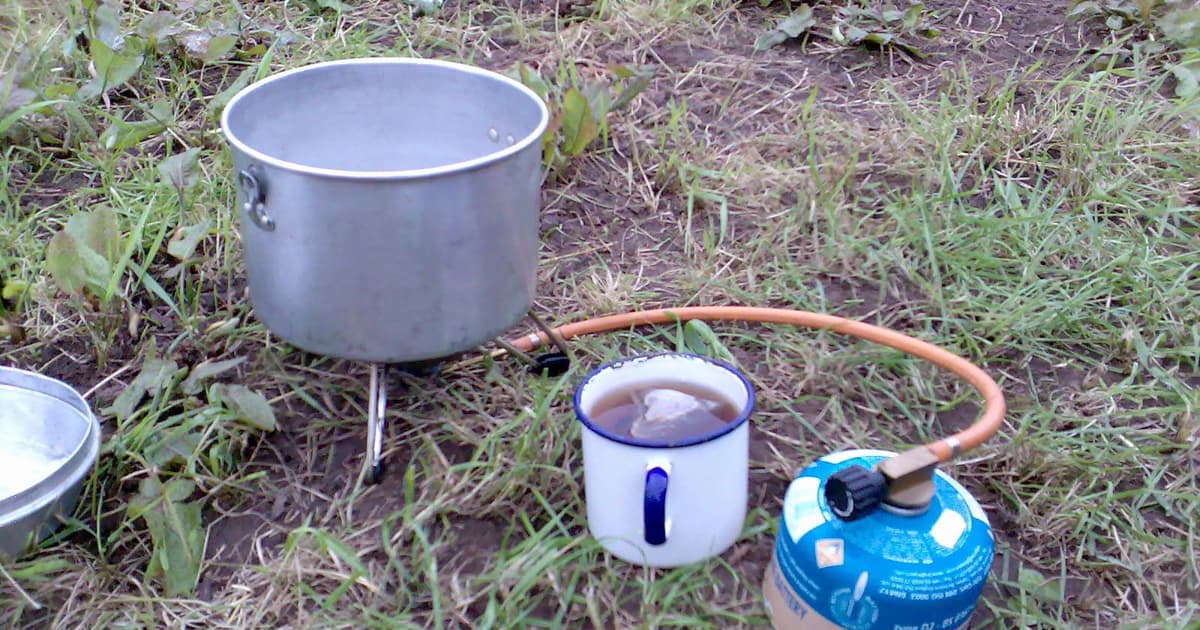
Less than the shops suggest. You can cook well at a campsite with one stove, one decent pan, a pot or kettle, a cool box, a few utensils and a washing-up bowl. The Camping and Caravanning Club's fuller equipment list runs past twenty items and is a good place to browse. We have cut it down into something that fits in a crate, then added some safety gear.
The list below is sorted by job. Tick it off at home. The boxes work in your browser, and may clear when you leave the page. Printing works too.
Fire and fuel
- See our stove guide.
- Check the fitting, and allow for a cold morning.
- Keep the matches dry in a bag.
- The Club also suggests raising stoves off the ground to protect the pitch.
Safety gear
- Add a lanyard for a tent. It backs up good habits and does not replace them.
- The Club recommends an optical type for a small space.
- Kept near the stove, for small fires.
- The Club recommends one outside your unit.
- Check the dates before you leave.
Keeping food cold
- Our cool box entry covers packing.
- Ask whether the site can refreeze them.
- You are aiming to stay well under 8°C.
Pots and tools
- This does most of the work.
- From home is fine if it fits the burner.
- The flask covers a wet morning.
- Stove-top handles get hot.
- In a sleeve, so nothing gets cut in transit.
- One for raw meat and one for cooked.
- A can opener matters more than you think.
- Reusable, and one each.
Water and washing up
- Collapsible saves space when empty.
- Check what the site provides.
- For when you are not near a tap.
- Use the site's bins, or take rubbish home.
Why the safety section sits near the top
Cooking puts flame, fuel and boiling water close to a tent, and the Club's safety advice gives it plenty of space. On this list, the alarm, the blanket and the water are the cheapest items and the ones you hope never to use. Do not store them at the bottom of the car. A fire blanket in a boot is not much use from the pitch.
The Club is also firm about what the alarm does not do: it should never be an alternative to its other precautions. Cooking still happens outside, and our tent and stove entry has the detail.
Things that earn their place, and things that do not
Some items look optional and turn out not to be. A second set of tongs is one. The FSA and UKHSA advise separate tongs, knives and chopping boards for raw and cooked food, and a shared pair is the easiest way to undo a carefully cooked sausage. A lid is another. It saves fuel and keeps out bits of the field.
Others can stay at home on a first trip, at least:
- A big set of matching camp pans. Your kitchen pans will do, and the Club says so. Only buy camp-specific ones once you know what you actually use.
- Powered gadgets. Blenders and espresso machines appear on some lists. They are pleasant, and no one misses them when the crate is full.
- A second stove. Unless you are cooking for a crowd, you can plan meals around one burner.
A note on disposable barbecues
You will see disposable barbecues on plenty of kit lists, including the Club's general equipment list. Before buying, check the rules for where you are going. The Club's own site policy says they will not be permitted on Club Sites until further notice, and they are banned in several other places too, as our campfire rules entry shows. A portable barbecue, raised off the ground, is what the Club's policy allows on its sites.
Packing it so you can find things
A single crate or plastic box does more than any clever storage system. Keep the stove and fuel apart from food, and keep fuel upright. Keep the things you will want on arrival, such as the kettle, mugs and tea, at the top. On a wet arrival, that crate is the difference between a brew in five minutes and an hour of emptying the car.
Food itself is a separate list, and the Club's camping foods page is a helpful start. Before you leave, look at the forecast and think about which meal you would make in rain. Then make sure you have the things for it, including a plan for not cooking at all.
Try it at home first
One tip costs nothing. Unpack the crate in the garden or on a balcony, outdoors, and cook one meal with only what is in it. You will find out what is missing, whether your pan sits safely on the burner, and how the stove lights in a bit of wind. It is far better to learn that the cartridge does not fit while the shops are still open.
Checked against
- Camping and Caravanning Club: Camping safety
- Camping and Caravanning Club: Camping cooking equipment
- Camping and Caravanning Club: Camping foods
- Camping and Caravanning Club: Club Site policies
- Food Standards Agency and UKHSA: Common BBQ blunders
We last opened these pages on 8 November 2026. Rules and guidance change, so treat the original as the final word.