Entry 05
Five simple camp meals you can cook on one burner
- Logged
- Weather
- Dry or breezy, cooking outside and away from the tent
- Pitch
- One burner, one pot, one small table
- Written by
- The editors, about 5 minutes to read
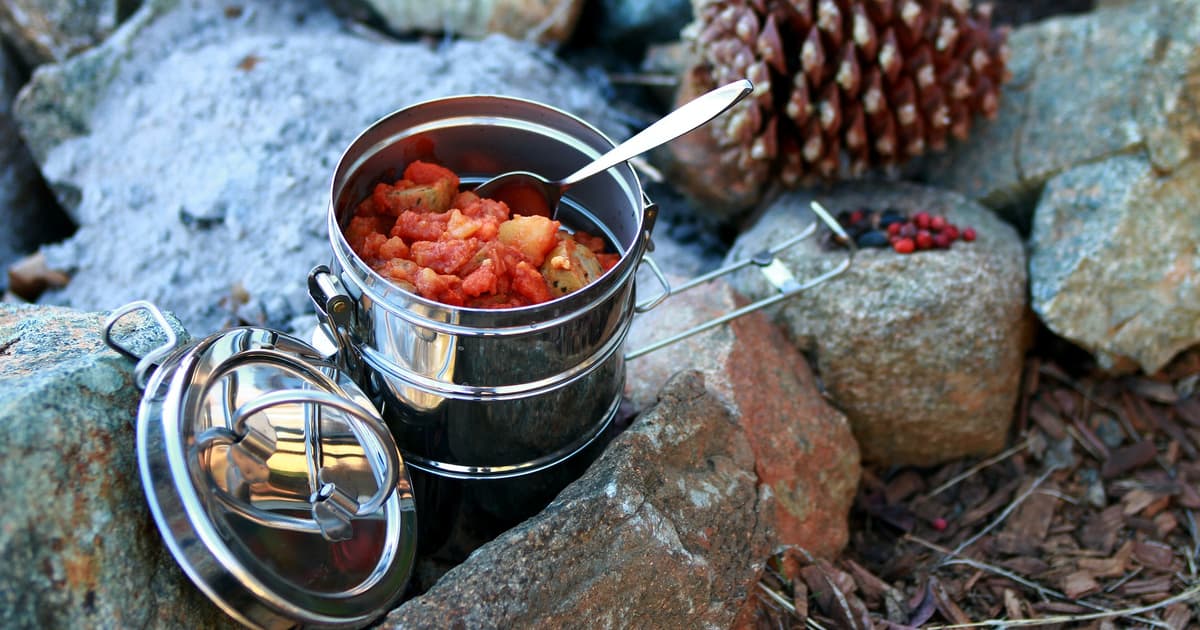
Here are five meals that need one burner and one medium pot or pan, with most of the ingredients coming from tins and packets. They are general recipes, written to be easy to adapt, so quantities for two hungry people are only a starting point. Times depend on your stove, your pot and the wind, so use the packet time for pasta and rice as a minimum and taste as you go.
For more ideas, the Camping and Caravanning Club has a long list of easy camping meals, including its own one-pot chilli and risotto. Our approach is narrower: meals you could still make on the third night, when the cool box has given up.
1. Store-cupboard chilli
Needs: oil, 1 onion, 1 tin chopped tomatoes, 1 tin kidney beans, 1 tin mixed beans or sweetcorn, chilli powder, wraps or bread.
Soften the chopped onion in oil. Stir in chilli powder for a minute, then add the tomatoes and drained beans. Simmer with the lid on, stirring often so the bottom does not catch, until thick. Eat with torn bread or wraps, which saves cooking rice in a second pot.
First-night version: brown 250g of mince before the onion. Cook until there is no pink left, then carry on.
2. Tomato and tuna pasta
Needs: 200g short pasta, 1 tin chopped tomatoes, 1 tin tuna, a spoon of capers or olives if you have them, hard cheese.
Boil the pasta in just enough water to cover it. When it is done, tip away most of the water, keeping a splash. Add the tomatoes and warm through until bubbling, then fold in the drained tuna and let it heat through. Grate cheese over it. The Club notes tinned fish is handy if you have no fridge or cool box, and this is the meal that proves it.
Drain with care: pour away from your body and legs, wearing a glove, with the lid held slightly open. Boiling water and a low camp table are an easy way to get hurt.
3. Red lentil dhal
Needs: oil, 1 onion, curry powder, 150g red lentils, 1 tin coconut milk or tomatoes, water, flatbreads.
Soften the onion, stir in curry powder, then add the lentils, the tin and about twice as much water as lentils. Simmer gently, stirring and adding water when it thickens, until the lentils collapse. Season well. Red lentils need no soaking, so this one is easy on fuel.
Tip: if your stove will not simmer in the cold, it may be the fuel. Our stove guide explains why butane struggles.
4. Sausage and bean pot
Needs: oil, 4 to 6 fresh sausages, 1 onion, 1 tin baked beans, 1 tin chopped tomatoes, mustard or paprika if you have it.
A first-night meal, as it needs the cool box. Fry the sausages slowly with the lid partly on, turning them often. Slice one open: the Food Standards Agency says sausages count as minced meat, so they need to be cooked all the way through, and it advises steaming hot throughout with no pink meat. Then add the onion, followed by the tins, and simmer until thick.
Keep separate: use one set of tongs for the raw sausages and another once they are cooked. Wash your hands afterwards, or use gel if there is no tap to hand.
5. Morning potato hash
Needs: oil, 1 tin new potatoes, 1 onion, eggs, smoked paprika, any leftover cheese.
Drain and slice the potatoes, then fry them with the onion in a good film of oil, leaving them alone long enough to brown. Make two gaps, crack in the eggs, put a lid on and cook until the eggs are as firm as you like them. The Club says eggs keep best under 20°C, so on a warm trip buy them close to when you need them.
Keeps you going: this works at any time of day. Tinned potatoes also skip the long boil, which is kind to a small cartridge.
Shop for all five with one basket
Most of these share ingredients, which is why they fit together. Tins of tomatoes and beans, onions, oil, a jar of curry powder and some chilli powder will do for most of the week. The Club's camping foods page makes the same case for tins and dried staples, and points out that oil keeps at all temperatures, unlike butter. Decant spices into small containers and leave the rest at home. Our kit list covers the hardware.
Five habits for a single burner
Set up first, then light it
Chop everything and open the tins before the stove goes on. You cannot reach for the can opener while something catches. Set the stove on a level, non-flammable surface outside, well away from the tent. Our stove and tent entry explains why that distance matters, particularly if it starts to rain halfway through.
Keep the lid on
A lid is the cheapest fuel saver there is. It speeds up the boil and keeps heat in the pot when the wind picks up.
Keep the pot steady
Small burners and large pots make a top-heavy pair, so keep the pot centred, stir with one hand on the handle and a glove on, and keep children away from the table while it is hot.
Check it is cooked
The FSA's visual check works without a thermometer: food should be steaming hot, including in the middle when you cut into it. That goes for anything reheated too, and leftovers should only ever be reheated once.
Make the right amount
Without a fridge, leftovers are a nuisance and rice in particular is a poor bet. The FSA says to chill leftover rice within one hour and avoid leaving it to cool in the pan. If you do serve rice, cook only what you will eat. Our cool box entry covers leftovers in more detail.
When the burner is not the answer
Some nights, the wind is too strong, the rain is sideways, or you are too tired to chop an onion. Bread, tinned fish, cheese and an apple is a real dinner. So is the nearest pub, which the Club's beginners' guide counts as a fair option. Cooking inside the tent is not one of the choices, however grim the weather gets.
Checked against
- Camping and Caravanning Club: Camping for beginners
- Camping and Caravanning Club: Camping foods
- Camping and Caravanning Club: Easy camping meals
- Food Standards Agency: Home food fact checker
- Food Standards Agency: Cooking your food
We last opened these pages on 8 November 2026. Rules and guidance change, so treat the original as the final word.