Entry 06
Can you use a camping stove in a tent? No, and here is why
- Logged
- Weather
- Cold, wet evenings, when cooking inside feels most tempting
- Pitch
- Any tent or awning, with notes for caravans and motorhomes
- Written by
- The editors, about 6 minutes to read
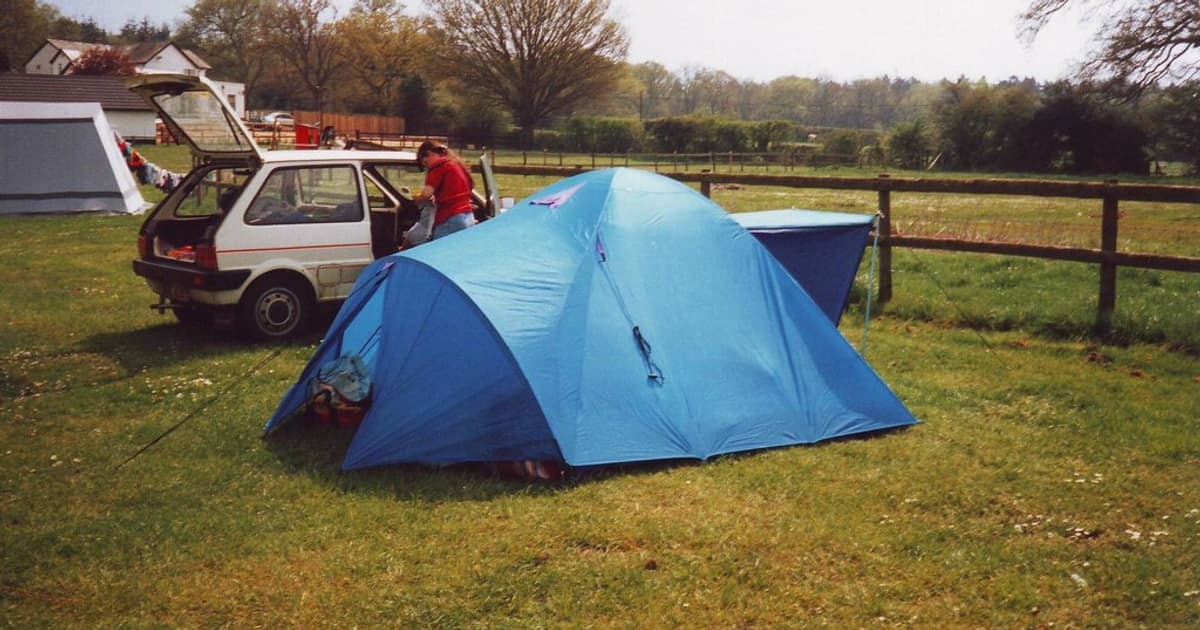
No. The NHS says plainly: do not use a barbecue or camping stove indoors or inside a tent. Fuel-burning cookers can produce carbon monoxide, and in a small enclosed space it can build up to a dangerous level without you noticing.
That advice applies to gas, meths and petrol stoves alike, and to barbecues in particular. It applies when it is raining, when you only want a brew, and when the door is unzipped. Rain is the usual temptation, so the useful question is what to do instead, and we come to that below.
Why a tent is such a bad place for a flame
The Health and Safety Executive describes carbon monoxide as a colourless, odourless, tasteless, poisonous gas that can kill quickly and without warning. It forms when carbon-based fuel does not burn completely. You cannot see it or smell it, so there is nothing in the tent to tell you it is there.
Tents make things worse in a few ways. The Camping and Caravanning Club points out that gas appliances use up oxygen and give off combustion products, and that even a gas lantern can eventually deplete the air in a tent if it runs for long enough. Modern synthetic fabric ventilates less than cotton canvas and is more easily damaged by heat. Add a pot boiling over or a stove knocked across a groundsheet and you have a fire risk on top of the gas.
A wet evening also tends to mean zipped doors, tired people and a long stove session. The Club's point about ventilation is that tents and awnings are not generally designed with fuel-burning appliances in mind.
Where to cook instead
The Club's own wording is short: don't cook inside your tent or awning. It asks that the cooking area is well away from the main accommodation. Its gas guidance adds that it does not recommend any combustion appliance in a tent or awning unless the area is specifically designed for it and properly ventilated, and gives a trailer tent with a kitchen annexe as the sort of thing it means.
In practice, that leaves a short list for a wet night:
- Use a separate, open-sided shelter well clear of the tent, if the campsite is happy with it. The sides must stay open, and fabric overhead needs generous clearance from the flame.
- Use a porch canopy only as a compromise. The Club says this is possible if the appliance is kept well away from the tent fabric. A closed porch does not count.
- Make something cold, or boil water between showers and keep it in a flask.
- Walk to the pub or café. The Club's beginners' guide lists relying on a nearby pub or café as a fair option too.
Plan your food around the wet-night fallback. Our one-burner meals are built to finish quickly, and our kit list includes a flask for this reason.
The barbecue that has already gone out
This catches people out more than stoves do. A barbecue looks finished, the evening turns cold, and it gets carried into the porch to keep it out of the rain or to squeeze out some warmth.
The Club warns that even a cooling barbecue gives off plenty of poisonous carbon monoxide, and that barbecues produce the gas even when they are working well. It says never to take one into a tent, awning, caravan or motorhome. Leave it outside, away from your sleeping area and anything it could scorch, until it is cold. Campsite rules on barbecues vary, so read our notes on what is allowed and where before you pack one.
Using a stove as a heater
This is a separate mistake with the same result. The Club is blunt: never use a fuel-burning appliance to heat your tent or awning, because stoves and barbecues are made for cooking and not for space heating. The same goes for a generator or heater not designed for the job. Warm kit is the answer to a cold tent, along with a hot drink made outside.
Does a carbon monoxide alarm make it safe?
No, though carrying one is still sensible. The Club suggests considering an alarm tested to BS EN 50291-2 and Kitemarked, and says alarms can be used in tents and awnings with a lanyard added. It also says an alarm should never be used as an alternative to the other precautions.
Think of it as a last line of defence for the things you did not foresee, such as fumes from a neighbour's generator. Test it before you leave home and check the batteries. Do not treat a silent alarm as permission to cook inside.
Signs that something is wrong
Early symptoms are easy to blame on something else, which is part of the danger on a camping trip. HSE notes that they can mimic common ailments and be mistaken for food poisoning, flu or tiredness. The NHS lists these among the symptoms:
- headache and dizziness
- nausea or vomiting
- tiredness, weakness and confusion
- chest or muscle aches
- breathlessness
- sight problems
One useful clue from the NHS is that symptoms can come and go, often getting worse where the gas is present and easing once you leave. If everyone in one tent feels rough at the same time, or you feel better after a walk to the toilet block, take it seriously. On gas appliances, HSE lists a yellow or orange flame in place of blue as a warning sign of incomplete burning, and soot staining as another.
If you think someone has been affected
- Get everyone out into fresh air straight away.
- Turn off the stove or appliance if it is safe to do so. Do not go back in until you have been told it is safe.
- Call NHS 111 for advice if you think you have symptoms.
- Call 999 or go to A&E if someone has trouble breathing, sudden confusion, weakness, chest or muscle pain, or loses consciousness. Do not drive yourself.
This follows the NHS guidance. Tell the medics you suspect carbon monoxide, since the symptoms can look like other things. Treat this as general guidance; for anything medical, speak to a doctor or call NHS 111.
Caravans, motorhomes and awnings
A built-in cooker designed for a caravan or motorhome is a different case from a portable stove in a tent, but it still depends on ventilation and upkeep. The Club advises having gas appliances serviced regularly, using a carbon monoxide alarm, and keeping fixed vents clear. The rule on barbecues stays the same in any unit: never inside. An awning is treated like a tent for this purpose, so a portable stove does not belong in there either.
What about mountain tents?
You may read that experienced mountaineers cook in their tent porch. The British Mountaineering Council's stove guide, written for people in serious terrain, says to only cook inside if you have no other option and warns that carbon monoxide is a risk with every stove. That is a last resort for hard conditions, with its own hazards. It is no guide to a wet Saturday on a campsite, where you have other options.
Checked against
- NHS: Carbon monoxide poisoning
- HSE: Carbon monoxide
- Camping and Caravanning Club: Camping safety
- Camping and Caravanning Club: Gas for tent campers
- Camping and Caravanning Club: Camping for beginners
- British Mountaineering Council: How to choose a stove
We last opened these pages on 8 November 2026. Rules and guidance change, so treat the original as the final word.